
Optical audio cable quality: Why precision engineering matters for your sound
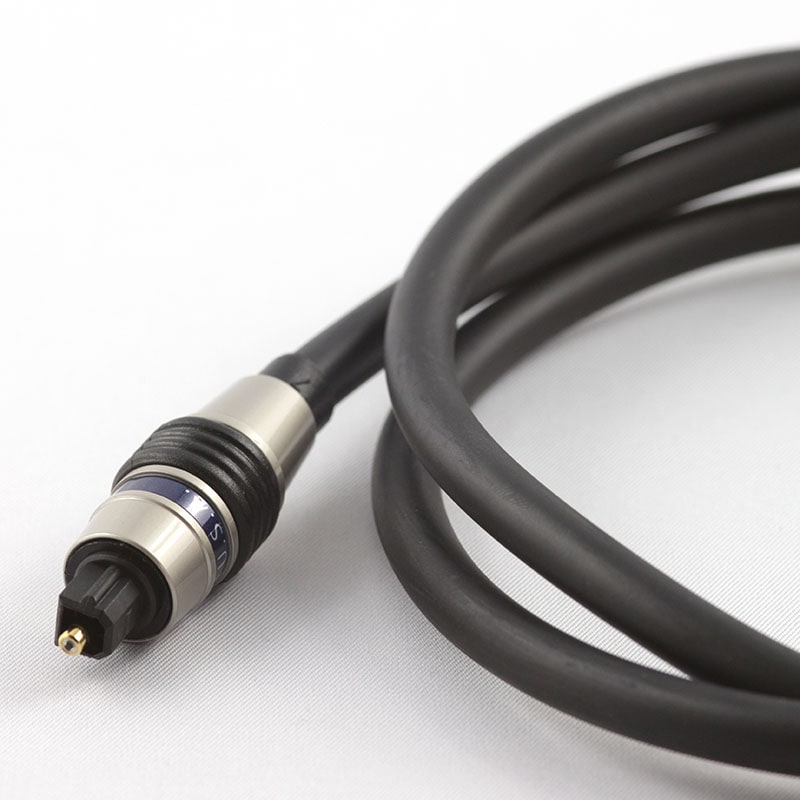
Discover how optical audio cable quality impacts your sound. Learn key factors for choosing the perfect cable and why precision engineering matters for your audio system.
Why Optical Audio Cable Quality Matters More Than You Think
When most listeners set up a home audio system, the cable connecting their devices rarely gets the same attention as the components themselves. Yet the physical medium through which your digital audio signal travels can have a measurable impact on the final sound quality you experience. Factors like signal dispersion, jitter — timing errors in the digital stream — and the precision of connector interfaces all play a role in how cleanly data reaches your DAC or amplifier.
The Toslink standard has been a fixture of consumer audio for decades, but not all cables built around it perform equally. A poorly manufactured fiber strand introduces light scatter that increases jitter, while an imprecisely polished optical interface creates reflections at the point of entry. These are not theoretical concerns: they show up as subtle degradation in timing accuracy, which matters especially in high-resolution audio playback where the signal carries significantly more data per second than standard formats.
How Kácsa Audió Helps You Find the Perfect Optical Audio Cable for Your Setup
Kácsa Audió is a Hungarian specialist that approaches cable retail differently from most online stores. Rather than simply shipping products, the team offers hands-on guidance, custom assembly, and real-world testing — so customers can evaluate a cable in their own system before committing to a purchase. That home-trial model is rare in the industry and reflects a practical commitment to matching the right product to each listener’s setup.
Their catalog of reliable optical audio cable solutions for your system spans two well-regarded brands: the in-house KáCsa line, which covers everything from entry-level runs to high-end 7,000-strand fiber constructions, and AudioQuest, whose Pearl, Forest, Cinnamon, Carbon, and Vodka series represent a clear progression in fiber quality, connector polish, and jitter reduction. Available lengths range from 0.75 m to 5 m, making it straightforward to find a solution for both compact desktop setups and larger home theater installations.
Choosing the Right Optical Audio Cable: Key Factors Every Audiophile Should Consider
Selecting the right optical audio cable comes down to three practical considerations: fiber strand count, connector quality, and cable length. Higher strand counts — such as the 19 narrow-aperture synthetic fibers in AudioQuest’s Carbon series or the 217 strands in the Vodka — allow more light to pass with greater consistency, reducing the jitter that can blur transient details in music and film dialogue. The finish of the optical interface is equally important: a precisely polished tip minimizes reflections and maximizes signal transfer at the point of connection.
Length is a factor that many buyers overlook. Digital optical signals do not degrade the way analog signals do over distance, but longer runs still place greater demands on fiber quality — which is why certain AudioQuest models rated at 3 m or longer use a wall-installable PVC jacket better suited to permanent in-wall routing. Matching the cable length closely to your actual need, rather than buying generously “just in case,” also helps maintain signal integrity and avoids unnecessary slack that can stress connectors over time.
The Future of Digital Audio Transmission: Trends Shaping Optical Cable Technology
As streaming quality improves and formats like Dolby Atmos become standard in more living rooms, the bandwidth demands placed on digital audio interconnects continue to rise. The Toslink interface, despite being a mature technology, remains fully capable of handling multi-channel PCM and high-bitrate surround formats — provided the optical audio cable carrying the signal is manufactured to a standard that keeps jitter consistently low. This is where the gap between commodity cables and precision-engineered ones becomes most audible.
Material science is also advancing the performance ceiling of fiber-optic audio cables. Synthetic fiber constructions with tighter aperture tolerances deliver lower dispersion than conventional plastic-coated alternatives, and gold-plated metal Toslink connectors — as found in the KáCsa Expert Line — reduce oxidation at the contact interface over years of use. For listeners thinking long-term, investing in a well-constructed cable is a practical decision that pays dividends as the rest of the system evolves.
